

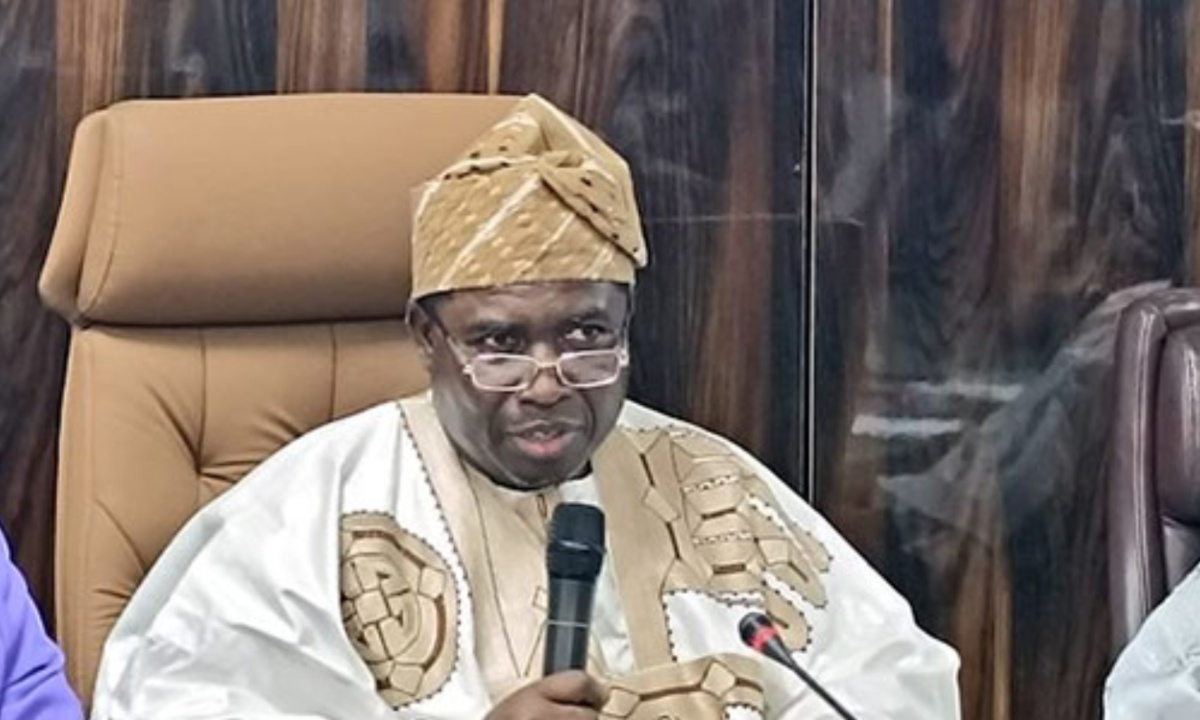
The Chairman of the Independent National Electoral Commission (INEC), Professor Joash Ojo Amupitan, is facing growing criticism following the resurfacing of old social media posts that suggest clear political leanings toward President Bola Ahmed Tinubu and the All Progressives Congress (APC).
The issue was brought to light in a detailed commentary by Nigerian-American professor, Farooq Kperogi.
In his write-up, he pointed to “SEVERAL verifiable past tweets by INEC chairman Professor Joash Ojo Amupitan from his time as a professor at the University of Jos unmistakably reveal partisan sympathies for the APC and, more specifically, for President Bola Ahmed Tinubu.”
He added that if Amupitan values the integrity of the institution he leads, “he should own up to them, acknowledge the moral burden they place on his office, and resign.”
Before now, questions about Amupitan’s neutrality had circulated quietly in political circles. However, the matter gained more attention after his alleged involvement in the internal crisis of the African Democratic Congress (ADC).
Critics say his actions at the time appeared to align with efforts to weaken opposition forces ahead of future elections.
The controversy deepened on Friday when more evidence surfaced. Records showed that in 2023, prior to his appointment as INEC chairman, an X (formerly Twitter) account bearing Amupitan’s name engaged in political conversations that openly supported the APC.
One of such posts dates back to March 18, 2023. On that day, the APC National Youth Leader, Dayo Israel, celebrated flipping his “nearby,” “Igbo-dominated” polling unit in favour of the APC. In response, Amupitan wrote: “Victory is sure.”
The response has drawn strong reactions. People say the statement was not just a casual remark but a clear endorsement of a partisan claim. The reference to an “Igbo-dominated” area has also raised concerns about ethnic undertones in political messaging during that period.
A day earlier, on March 17, 2023, another exchange added to the controversy. A social media user alleged that supporters of Labour Party candidate Peter Obi circulated a misleading image to discredit Lagos lawmaker Desmond Elliot. Reacting to the claim, Amupitan wrote: “They are evil in the 24th [sic] century.”
Another post on April 25, 2023, further fueled the debate. A pro-Tinubu account celebrated the reception the president received at the Abuja airport. Amupitan responded with a single word: “Asiwaju.”
Though brief, the word has significant political meaning. It is widely used by supporters of Tinubu as a symbol of loyalty and admiration. For critics, the use of that term in a public exchange suggests participation in partisan discourse rather than neutral observation.
Following the resurfacing of these posts, the account linked to Amupitan reportedly underwent several changes. Its handle was altered, later rebranded as a “parody” account, and eventually made private. Despite these changes, digital records have continued to link the posts to the original identity.
This sequence of events has raised further questions about transparency. Observers note that the timing of the changes appears to coincide with increased scrutiny, leading to suspicions that efforts were made to limit public access to past activities.
Interestingly, Farooq Kperogi admitted that he had previously defended Amupitan. In an earlier column, he described him as “an accomplished professor of law and a revered Senior Advocate of Nigeria who has no known record of partisan political affiliations.” However, he now says new evidence has changed that assessment.
The core issue, according to analysts, is not whether Amupitan held political views before his appointment. Rather, it is the nature and visibility of those views, and how they affect public confidence in INEC as an impartial body.
Electoral credibility in Nigeria has often been a subject of national concern. Experts warn that even the perception of bias at the top of the electoral commission can weaken trust in the entire process. For many Nigerians, neutrality is not just expected but essential.
So far, Amupitan has not personally addressed the allegations in detail. However, INEC’s Chief Press Secretary, Adedayo Oketola, issued a statement claiming that the social media account in question is “fake.”
